Put simply, a purified water fed pole is how you put mineral-free water and a brush to work on a piece of glass with a telescopic pole and let it dry off unspotted. When applied correctly the method is quick for your exterior routine on a house or a mid-rise building and it keeps you from lugging a ladder about, which is better for safety and leaves the window spotless.
I am Nina Corcoran and I will not put a gloss on it. A Pure Water Fed Pole System is fine as long as the water is of a true purity and you are not in a hurry with the hard parts of the job, be it top frames, hydrophobic glass or seals. People make the mistake of thinking the system is straightforward because in principle it is, but in practice it can be as fussy as a road trip where you have packed everything but the one thing you require.
The Case for This Way of Doing Exterior Work
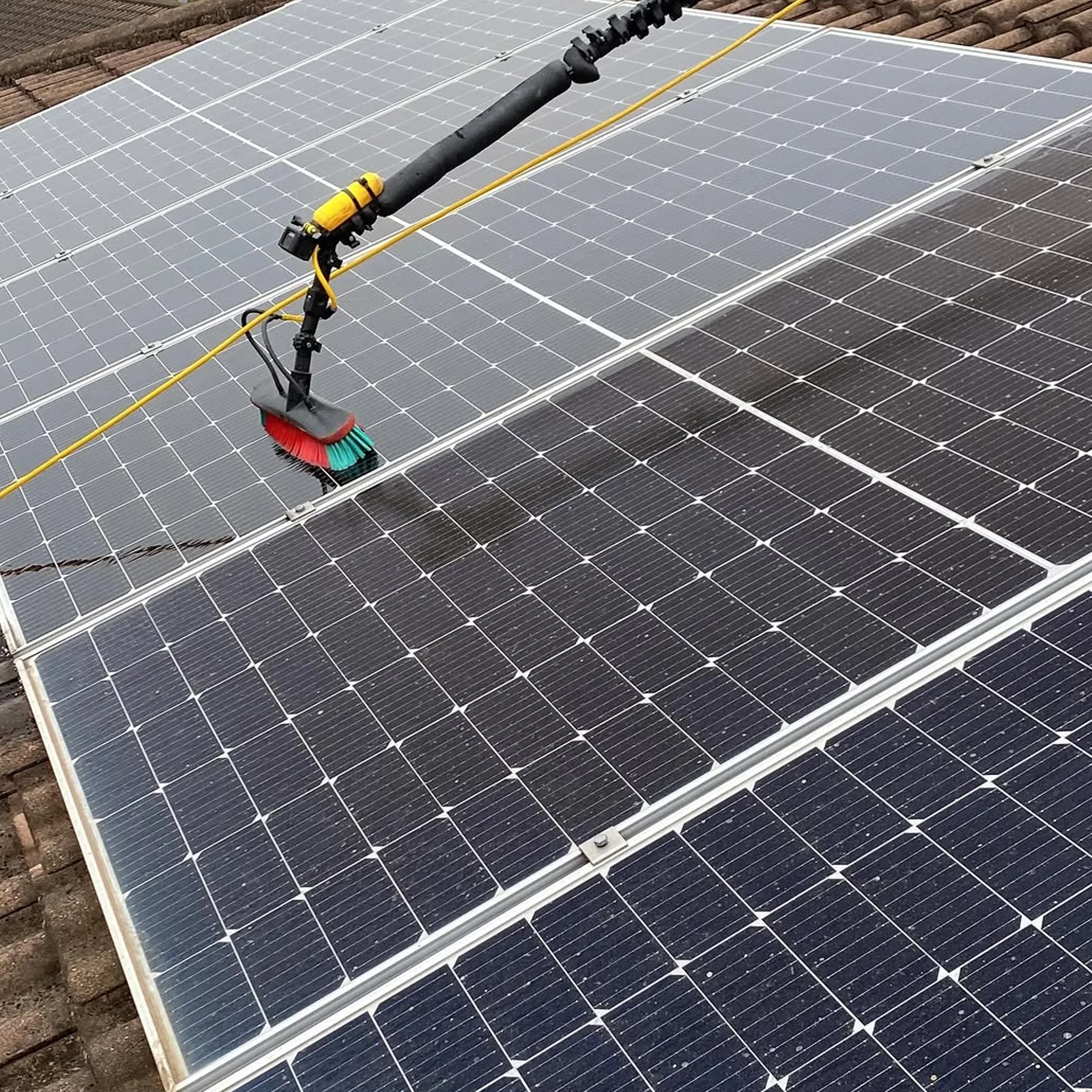
It is no surprise that water-fed poles are standard issue for a good many operators. You can get at awkward glass and wash down sills, frames and seals from the ground, all without having to put a ladder through the garden beds.
In Australia you need that sort of efficiency. With the heat, salt spray, dust and hard water deposits, an old-fashioned approach to glass can be slow and uneven. For those interested in finding the best tools for the job, check out glass cleaning device reviews. Purified water offers a process you can rely on, provided your filtration and technique are up to it.
What Is Going On With the System
Water is pumped from a hose reel by way of a pole to the brush head and its rinse jets. After you have scrubbed the glass and frame you give it a rinse with the purified water. Low total dissolved solids mean it will air dry rather than put in an appearance as mineral spots.
Some will call it the Reach & Wash technique, others something else, but the suppliers’ nomenclature aside the point is to do away with dirt mechanically and have the pure water see to the rest.
Making the Water Pure
Fancy poles and expensive brushes are no substitute for water quality. What you end up with is dictated by the latter.
You will find most Australian systems employ a mix of deionisation and reverse osmosis. Remember this: the brush does its part but it is the quality of the water that makes for a clean pane or a spotted one.
RO DI Explained
When we talk of RO DI water for windows, we are talking of water put through reverse osmosis and then deionised. The former forces water through a membrane to strip out the bulk of the minerals. Deionisation, often with mixed bed resin, puts the final polish on and gets the solids down to where they should be for spot free work.
If you are in an inland area or anywhere the water is hard, reverse osmosis will put more life in your resin. In places with lower TDS some will run a DI-only arrangement like a GO H2O Pro type system or a compact trolley, though rough supply water has a way of making the cost of resin mount up.
On the Subject of Tds
Consistent results demand a TDS meter. TDS is total dissolved solids in parts per million and pros want their output near 0 ppm; any mineral load at all can show up as spotting on a dark frame or hot glass.
There is a world of difference between what a novice expects and reality. “Filtered” is not always sufficient. Let your meter go above the mark and the glass will be patchy when it dries, particularly if you have not rinsed well or are working in the sun or coastal salt.
Equipment for the Job
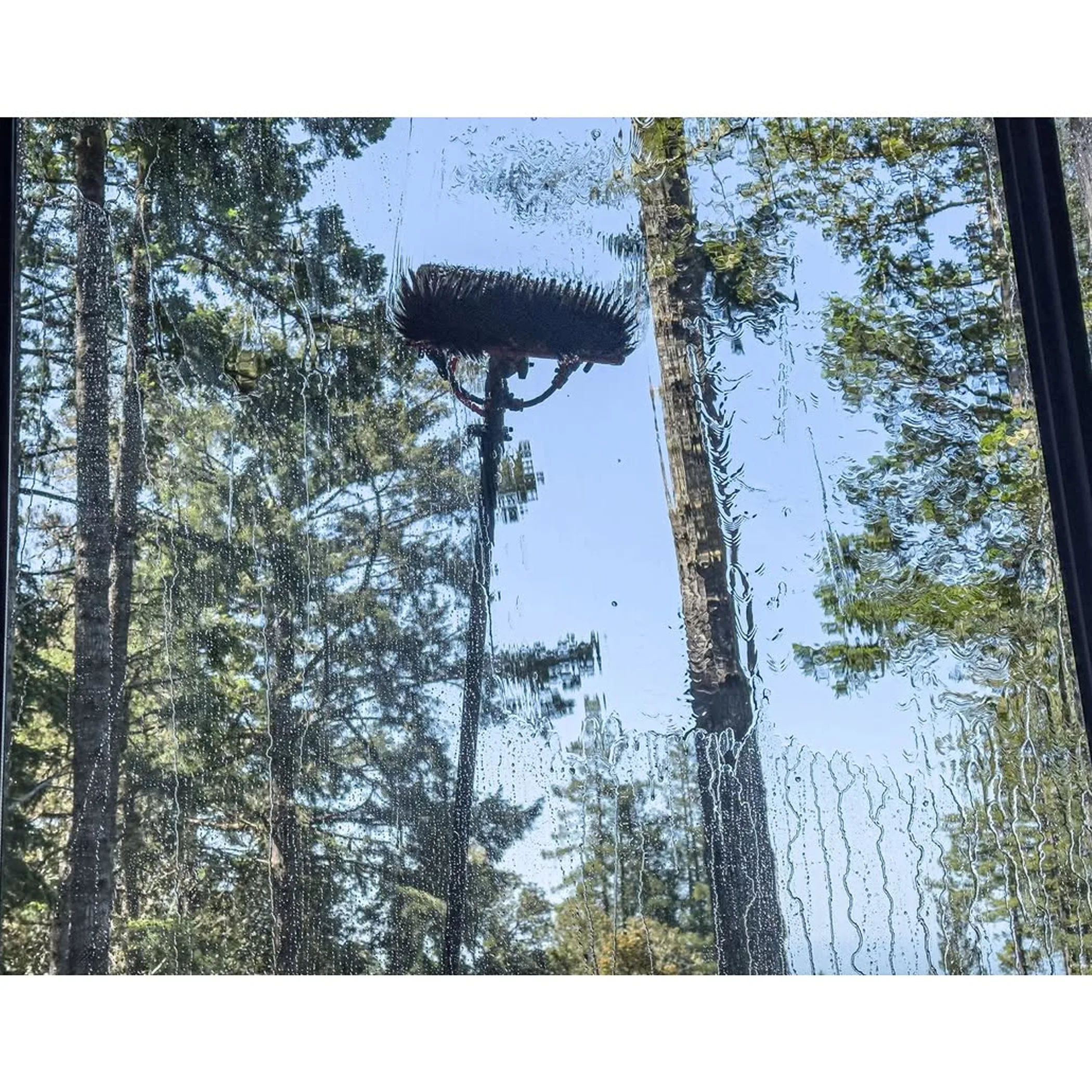
A few pieces of kit will help, but there is no call for all the shiny extras. Keep the van from looking like a science experiment and choose what fits your budget and the height of the building.
And I would say that lighter equipment is easier on the shoulders and one’s temperament. A heavy pole is all right for ten minutes, but by the time you are at property number three it is another matter. A Breakdown of the Equipment
| Equipment | What It Does | Best For | What Catches People Out |
| Carbon fibre pole | Lightweight for getting at upper glass | The professional who is on it all the time | You pay more up front for the sake of less fatigue |
| Telescopic pole | Ground level reach that is adjustable | Domestic work and the like | An inexpensive one will have a habit of flexing when you put it out |
| Brush head (rinse jets) | Does the scrubbing and rinsing in a single pass | Exterior glass | Stubborn grime can be overlooked with the wrong bristle |
| RO/DI filtration | For pure water | Hard-water or high-volume zones | Neglect the maintenance and the membrane and resin will not last |
| TDS meter | To verify the purity of the water | Any operator | One tends to forget to put it to the test once the filters are changed |
| Hose reel | A neat way of feeding water | Mobile rigs and the larger sites | Kinks are a waste of time and cut your flow |
Poles, Brushes and Control
The quality of a water fed pole brush is dictated by the soil load and surface. Maintenance cleans call for softer bristles, but you want something with dual-trim or stiffer bristles to deal with cobwebs, dusty tracks and baked-on grime on a first clean. For regular use a carbon fibre pole is money well spent as there is less of the flex and fatigue you get from heavier stuff.
Then there is the matter of flow control. A pro will vary the rate to suit the height of the job, the dirt and length of hose rather than have a one size fits all approach. Too little and you are putting the dirt right back, too much and you are being wasteful and your rinsing will be sloppy.
Cleaning To A Professional Standard

The merits of a purified water fed pole method will be plain to see if you have good technique, or they will not. It is not exactly glamorous but it separates a clear pane from a call-back.
Those new to the water fed pole should take it slow at first. From the footpath it seems simple enough, but consistency is more of a virtue than speed.
Working Method
- Make a site check before anything else. Note any powerlines overhead, loose pavers, pets, cars, muddy ground or restricted side access. It is safer to work from the ground than a ladder but do not think it is foolproof.
- Put a TDS meter to your output. Should the reading be higher than you want, attend to it before you go near the glass.
- Pre-inspect the windows. If there is salt build-up, paint specks, spider mess or oxidised frames, a first clean will demand it. Make an allowance for that or the quote will be off.
- Frames and upper edges first. Give the top frame, corners, seals and vents a good scrub to keep the run-off from marring a finished pane.
- Adopt some order in how you work the glass. I will do my horizontal passes then put in the vertical detail on the bird-drops and edges.
- Rinse it well. Run a curtain of water down the pane from the top to let the contaminants sheet away, perhaps with the brush just lightly on the glass or lifted off.
- And leave it alone to air dry. No squeegeeing, no fiddling with a towel on the edges. The error most make is to be hasty with the rinse after a proper scrub, particularly about the seals where dirt will seep back on to the pane as it dries. Clean the edges as though they were guilty; it is the one technical thing to bear in mind.
Access And Timing
Expect to put in 1.5 to 3 hours on the exterior of an average Australian single-storey home with its share of grime. That is assuming you are not dealing with a neglected first clean and factoring in shade, flyscreens and hose drag. Soft lawns, gravel, retaining walls and narrow paths will eat into your time.
When time is short and you have to make choices, start with the sun-exposed front and any upper-storey glass. Dust and street grime show up quickest there. Steep blocks and poor drainage are best left to someone with more experience.
Refining Your Technique
Once you have the basics down, a few tweaks will give you a more dependable finish. An old hand will save time this way without making a fuss, a novice will be the cause of a call-back.
Add in the Australian weather with its sea breeze, tree sap, smoke residue and the odd rain shower and warm glass and you will find the job is not always so forgiving.
Scrub With Some Sense
There is no contest: a good scrubbing pattern will put random waving to shame. For maintenance, make your passes overlap and do not be shy with the pressure on corners, bug spots or where finger marks have been. A first clean is another matter; allow yourself more time on sills and frames and plan for a couple of rinses.
The angle of the brush is important too. You want to agitate the dirt but there is no point in having the pole bow like a fishing rod. On taller jobs a stiffer carbon fibre pole will hold the line and not put up a fight.
Get The Rinse Right
Water from the top down should run as a clean curtain and take the loosened dirt with it off the pane. Should rinse jets be obstructed the water will fan out in an uneven fashion and you will have tracks to show for it. Aim for a flow rate that is balanced; sufficient to flush out contamination but you are not going to spray the whole driveway.
Is light rain any impediment? Not usually for maintenance since it is the dirt and dissolved solids that spot, not the rainwater itself. Unless it is coming down hard enough to throw grime from the ground or walls back on to the glass, in which case call it quits. As for storm risk, wind and lightning, have a look at the Bureau of Meteorology warnings and forecasts before venturing outside.
Pure Water Versus Added Chemicals
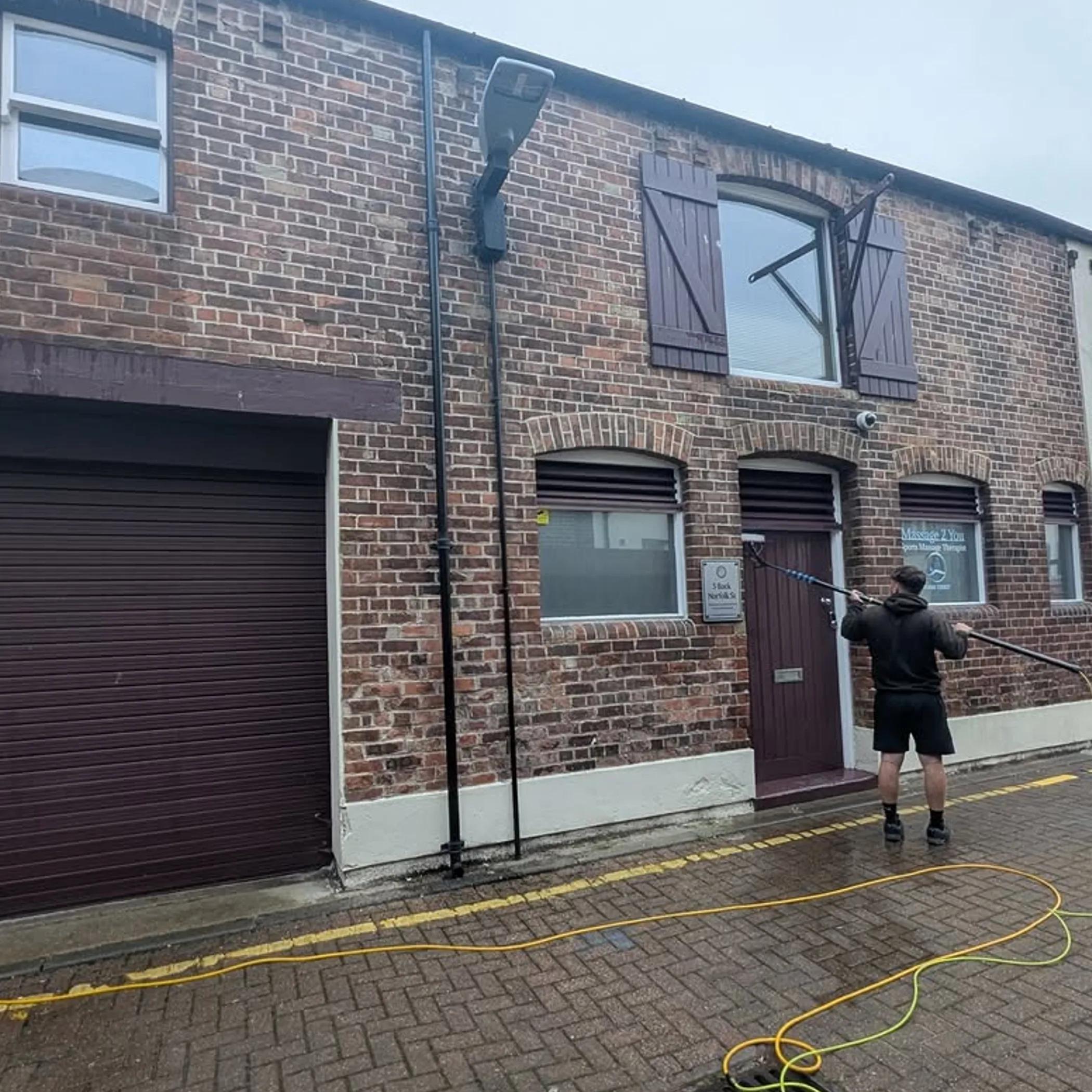
If one is using a water fed pole on exterior glass, pure water is the way to go. It is what the method is for and putting soap in the system is likely to be more trouble than it is worth. Detergents are a specialist backup for the odd occasion, nothing more.
When Additives Make Sense
Ordinarily, dust, pollen, bird mess, salt and traffic film are no match for pure water and some agitation. An additive might be called for outside the pole system to deal with post-build or adhesive residue but those are problems of a different order to a standard purified water job.
One does not want to foul the resin and ruin the spot-free finish by running chemicals through a pure water system without ascertaining compatibility. Do not be tempted to outsmart the system over a recalcitrant pane.
Maintenance That Protects Your Finish

It may not be as much fun as new equipment but proper upkeep of the system is more important. Many a tale of “bad method” is simply bad maintenance. Nina Corcoran has a rule for it: if the water is off so is the result. Put the blame on the filters, not the brush.
Filter And Resin Care
Sediment and chlorine are kept at bay from the RO membrane by the pre-filters and carbon stages. The RO membrane does its part to cut down the mineral load and then the DI resin polishes the water. Once the output TDS can no longer be brought to your target, the resin has to be changed.
You cannot set a schedule for that as feed water is not consistent; a regional industrial area will not be the same as a coastal city or an inland town. A meter is far better than guessing. See to it that you check output TDS on a regular basis, not only when spotting appears. Keep an eye on pressure and flow for blocked membranes or pre-filters. Change mixed bed resin on the evidence of your readings. If there is a drop in flow or debris, give the hoses and jets a flush. And put brushes and poles away clean to keep grit off the glass and frames.
- Check output TDS regularly, not just when jobs start spotting.
- Watch pressure and flow for signs of blocked pre-filters or membrane issues.
- Replace mixed bed resin based on readings, not hope.
- Flush hoses and jets if flow drops or debris appears.
- Store poles and brushes clean so grit does not scratch glass or frames.
Rough Cost Expectations
In Australia the buyer will find DI-only entry systems are cheaper to put in hand, whereas a van or trolley RO/DI setup of any size will set one back more initially but in hard-water locales curbs the cost of resin. With filter and membrane costs dependent on the supplier and water quality, it is the lifecycle cost that should be compared.
For those in the business of quoting, be aware a first clean can be a great deal more protracted than a maintenance one as old grime lingers on the frames. Price them alike and the former could eat the day as a mozzie does an ankle.
Safety Reach And Aussie Conditions
The safety water fed poles afford is genuine provided they are used with sense. One is dealing with long conductive gear, water and uneven footing after all.
Then there are the Australian variables: the UV, hot surfaces, sandstone dust and salt by the coast, not to mention side paths that seem designed to try the patience of tradies.
What To Watch On Site
Stay well away from overhead electrical hazards. Do not work in strong wind or a thunderstorm. Have the hoses under control so as not to trip anyone. At a multi-storey residential site make sure of your access and drainage to start with; you do not want to leave neighbours with a slippery entry or to have to answer for runoff. Safe Work Australia is the source for official information on safe systems of work, risk management and hazards; their guidance on workplace safety is applicable in every part of Australia and a sound reference for any business to draw on when they put their training and procedures in place.
Common Problems And Straight Fixes

You will find that most unsatisfactory outcomes can be traced back to a few things: poor water or rinse, a dirty seal, an unsuitable surface, or perhaps one has had unrealistic expectations of a first clean. But then you have only to put your finger on the cause and the matter is easily rectified.
Honesty has its place here too. A window left to its own devices may require two passes and some patience, some frames will oxidise and not all glass is created equal, some being hydrophobic.
Spotting Streaks And Milky Marks
Windows that have dried with spots call for a test of the water as a first order of business. High TDS is the prime suspect. When TDS is in order, check the brush bristles for contamination, the upper seals, your method of rinsing or whether the frames are oxidised. With hydrophobic glass the beading will dry unevenly so your rinse technique is all the more important.
Streaks are generally a sign the dirt was not completely flushed but merely displaced. Put in a bit more time on the rinse, start with the top edges and make sure the head of the brush is giving an even flow from its jets.
Algae Salt And First-Clean Trouble
A repeat pass and some agitation are called for with algae on sills and frames. On a coastal property the salt film has a way of looking fine when wet and patchy after it dries. As for first cleans, do not be surprised if the rubber seals give up some concealed grime once you have put the pane to rights; it is nothing personal.
Where a property is exposed to sea spray, bushfire smoke or the dust of a busy road or construction site, make sure the customer knows what to expect at the outset. Frequency of maintenance is key. An overlooked pane might put in a good performance on day one but you would be wise to put in a second service for the best of it.
Who This Method Is Best For
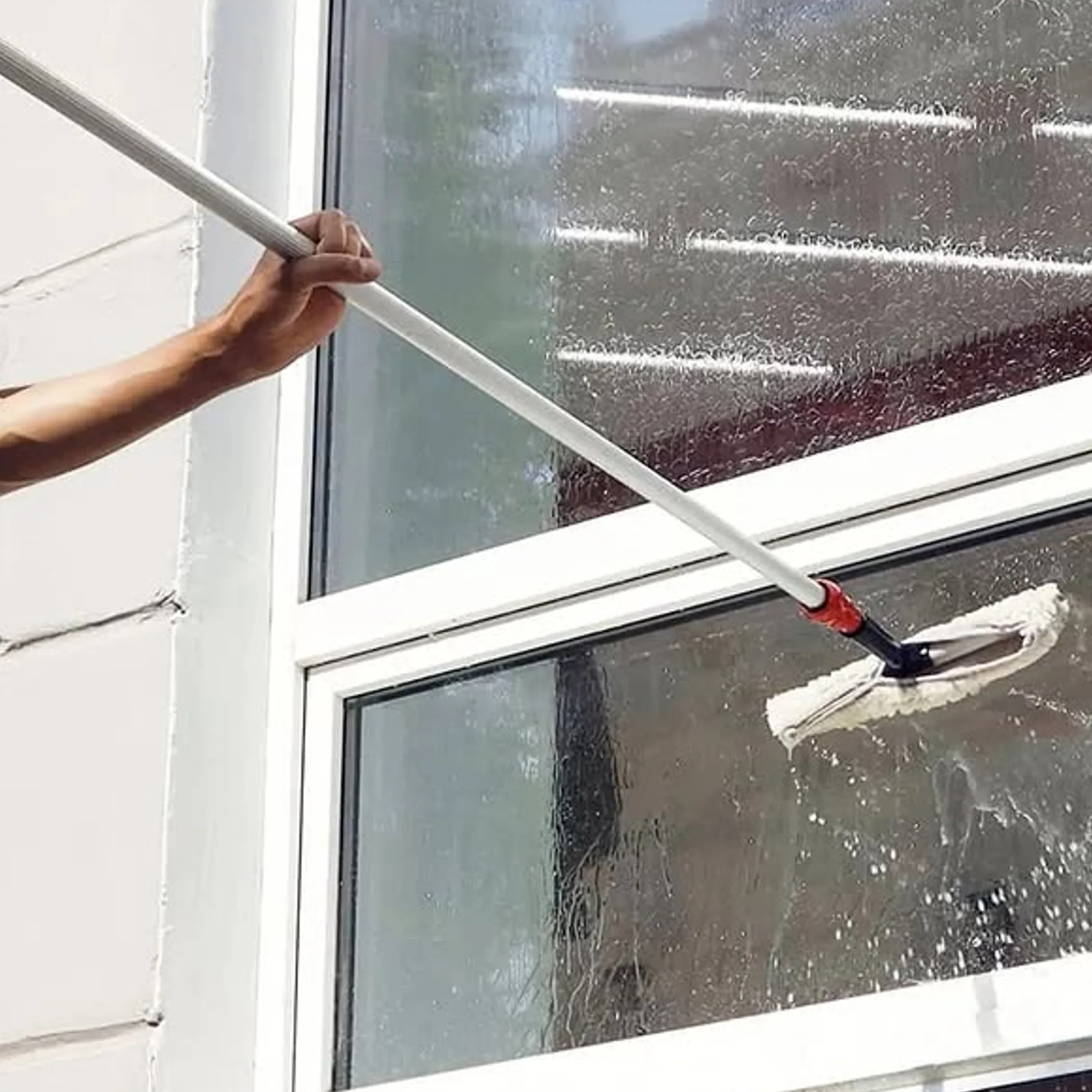
Professionals, facilities staff and owner-operators of a certain calibre who are after consistent results and safer access to the exterior will find this approach to their liking. It has its uses on strata sites, offices, schools and shopfronts where the upper windows are awkward to reach.
For a small indoor job done once in a while, or heavily greased glass, it is not so well suited. Nor for those disinclined to look after their equipment and water quality. If the idea is to set up quickly without any testing or upkeep, this is a method that will be more of an irritation than an aid.
FAQ
Before committing to a change of method or purchasing gear, there are questions to be asked, and rightly so. The system is straightforward enough but the devil is in the details.
What makes a good solution for water fed poles?
In the case of normal exterior work, pure water is the answer. With a water fed pole the mineral free rinse and agitation do the cleaning, there is no need for detergents which will stand in the way of a spot-free finish.
How is one to go about it with a water-fed pole system?
After a test of the water, give the glass and frames a thorough scrubbing and then use pure water to flush the contaminants away, working from the top down. Allow it to air dry. You will get more out of proper edge work and a good rinse than brute force.
Washing with purified water?
Put a brush and pole to the task with filtered water that is up to your TDS meter’s target, loosen the dirt and give it a clean rinse. Do not be wiping the glass after. Let it air dry.
Is rain going to spoil a job with a water-fed pole?
Not necessarily on a maintenance clean, light rain will not do it. But if there is a chance of runoff or splashing marring the pane, or if the weather is heavy with wind and storm risk, better to wait.
When to put in new DI resin?
When the purity of the output water does not measure up. How often that is will be a function of the system and the water you put in. Make a habit of testing. Change the resin on the evidence of the readings, not some calendar estimate.
The bottom line
With routine maintenance, a disciplined hand and water that is truly pure, a purified water fed pole is very effective. Get your filtration and equipment right and you can deliver safe, dependable results on exterior glass for all manner of Australian properties.
Keep it simple and do not skimp on the unglamorous parts. There is no gimmick to pure water window cleaning, it is a method. Handle it with due respect and it will see you to a spot-free finish with less trouble on the ladder.