SEO Title: A Guide to the Sweetheart Crocodile
There was a time when Sweetheart, a sizeable male saltwater crocodile of the Northern Territory, made his name by way of outboard motors instead of people. He put in an appearance on the waterways around Darwin and the Finniss River in the 1970s to become something of a celebrity, until a botched capture in 1979 put an end to it.
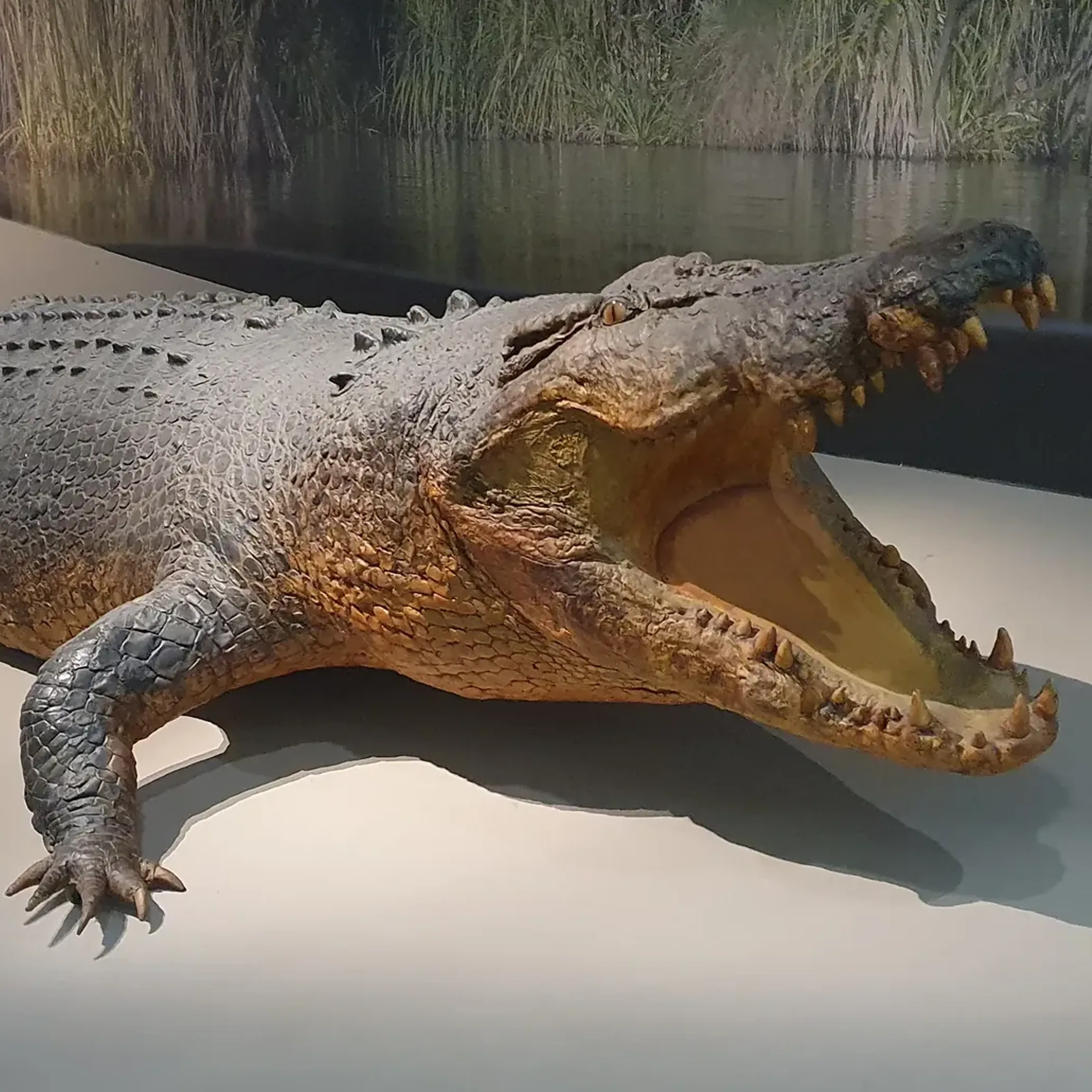
One could say that nature is not given to subtlety. You can look at photographs of Sweetheart but they will not do you the favour of preparing for the head, the teeth and the bulk of a five-metre-class animal. That is why his preserved form at the Museum and Art Gallery of the Northern Territory in Darwin is such a draw; it is one of the best specimens in Australia and puts things in perspective.
How he achieved fame
Do not think of him as a hunter of swimmers. Historical records tell of a crocodile with a habit of going after small boats and their motors, a pattern at odds with what one might expect from the word “crocodile” and a genuine hazard to those operating them.
Nina Corcoran has written on the chasm between the sort of language tourism puts forward and what is actually experienced. With Sweetheart the facts are plain enough: a dangerous situation does not require an attack on a person. One strike at a boat and the equipment is ruined, passengers are in the water and a placid day of fishing is no more.
A crocodile with a taste for boats
Contemporary reports have Sweetheart making for the motor to bite it. What drew him in, the commotion perhaps, is hard to put to proof now.
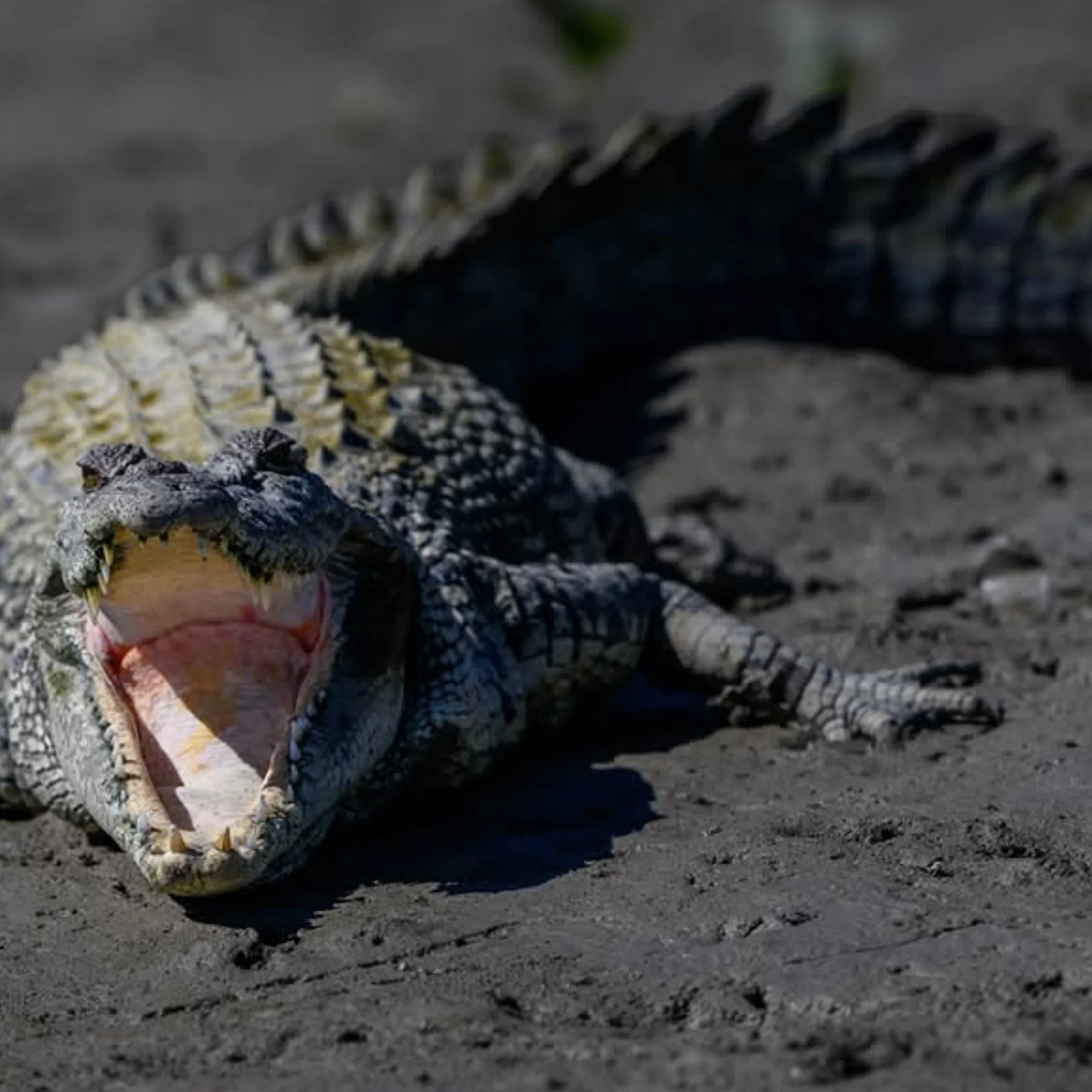
But it is a mistake to conclude that an animal is to be considered safe on account of its unorthodox ways. Up close a crocodile is still all power and unpredictability. To be wise about crocs is to heed local warnings and keep your distance, regarding any Top End waterway as their domain.
The 1979 incident
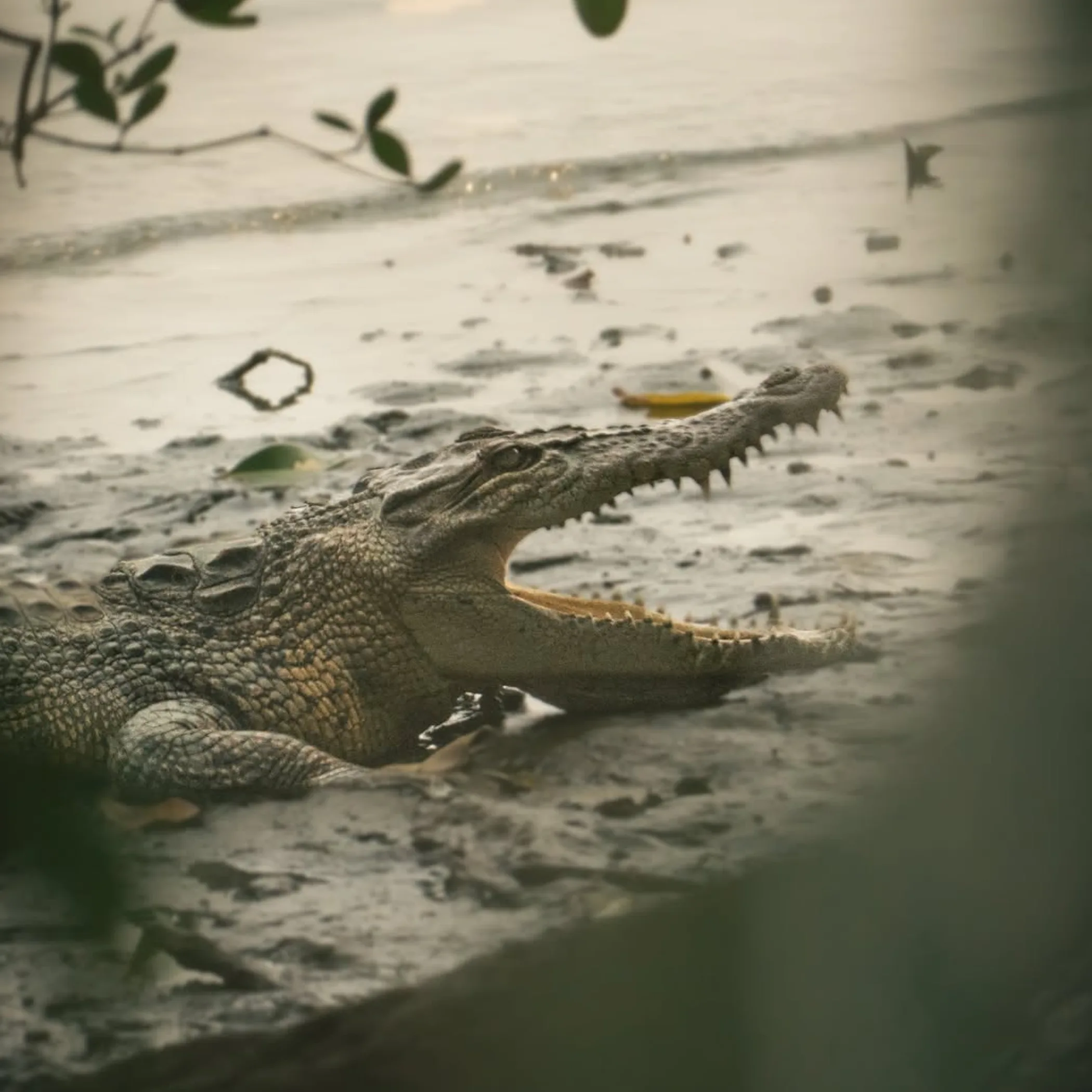
In the end the authorities felt there was too much of a risk to those on the water and resolved to remove Sweetheart. They set about it in 1979 and it was to end in tragedy. As they were moving him the crocodile got fouled by a log under the water and died before he could be put on display or sent to a farm.
19 July 1979 is the date given in most accounts. It is testament to how perilous a job it is to handle a wild crocodile of this magnitude, plan and equipment or not.
What went wrong
He was simply entangled. The team were unable to get him free. While a crocodile can stay down for a while, restraint will see to it that he drowns or exhausts himself.
It is a case in point for the kind of measured approach and specialist crew modern wildlife operations employ. You cannot manage a crocodile with some rope and a tinnie and a hopeful attitude. Not in the bush anyway.
By the numbers
It is not easy to get an accurate measure of a large crocodile in the field so sources may differ on the details. The following should be taken as good estimates.
| Feature | Commonly Reported Detail | Why It Matters |
|---|---|---|
| Species | Saltwater crocodile | A major safety issue in the Top End and the biggest of the living reptiles. |
| Sex | Male | Adult males of a certain size are very territorial. |
| Length | In the region of 5.1 metres | Makes him one of the largest in these parts. |
| Weight | Put at several hundred kilograms, though less reliably than the length. | |
| Death | 1979, an outcome of the capture attempt. | |
| Current status | A historical specimen on view for those who would learn without putting themselves near a wild one. |
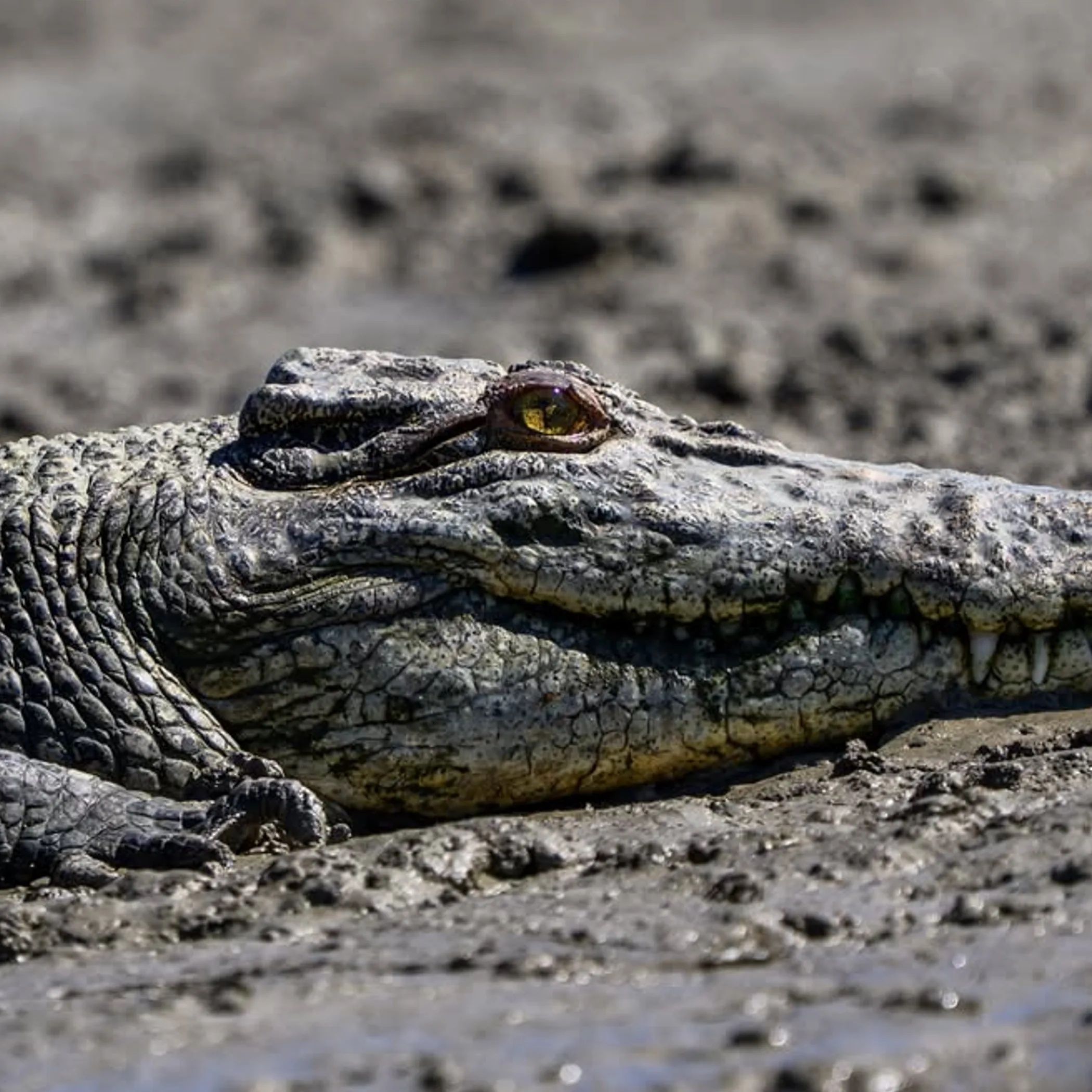
Then there is the matter of length. At 5.1 metres he is longer than your average family car. A practical if not scientific way of appreciating the size of a creature whose snout and eyes are all you may see above the surface.
The Finniss River
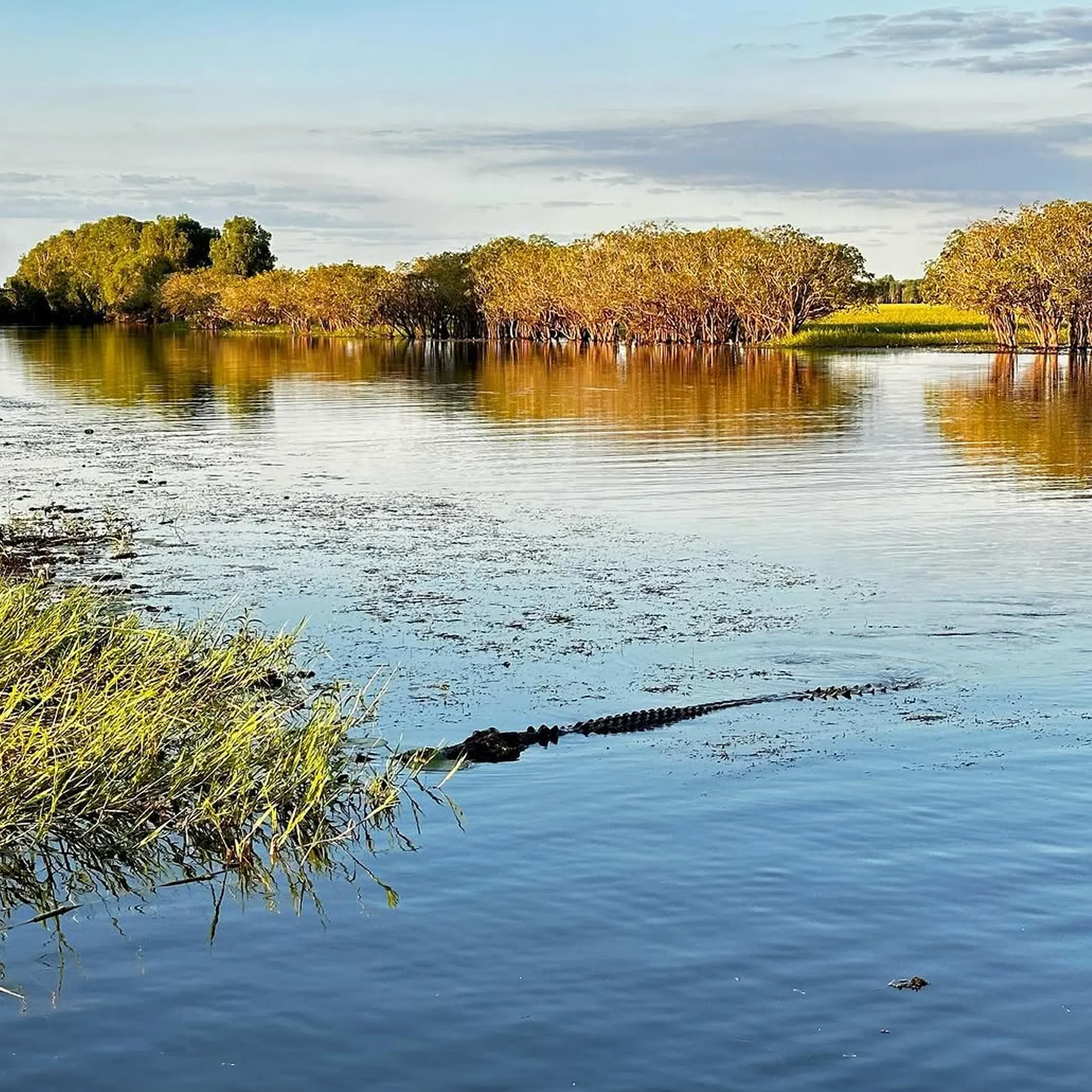
The river and the floodplain country to the west and south-west of Darwin are where you find the story of Sweetheart. Tidal waters and seasonal wetlands make for good habitat and the Finniss is part of that Northern Territory landscape.
A historical link is not a licence for visitors to go in search of where Sweetheart used to be. The animal is long dead and the wild crocodiles of the Top End have their own vast territories. One is there to observe behaviour and habitat, not to do some treasure hunting with binoculars.
Top End Waterways
There is a marked difference in the rivers of the Top End from the wet season to the dry. A deluge will put low country under water, make access tracks unpassable and join up waterways that are distinct in drier times. Inexperienced travellers would be surprised how far inland the tides can carry a saltwater crocodile.
It is a mistake to think clear water is safe or that a small creek poses no danger, or even that a crocodile will make way once it has clocked you. They are hard to see if they are lying motionless by the bank. Heed any sign that says do not swim or fish or get near the water.
Visiting Sweetheart In Darwin
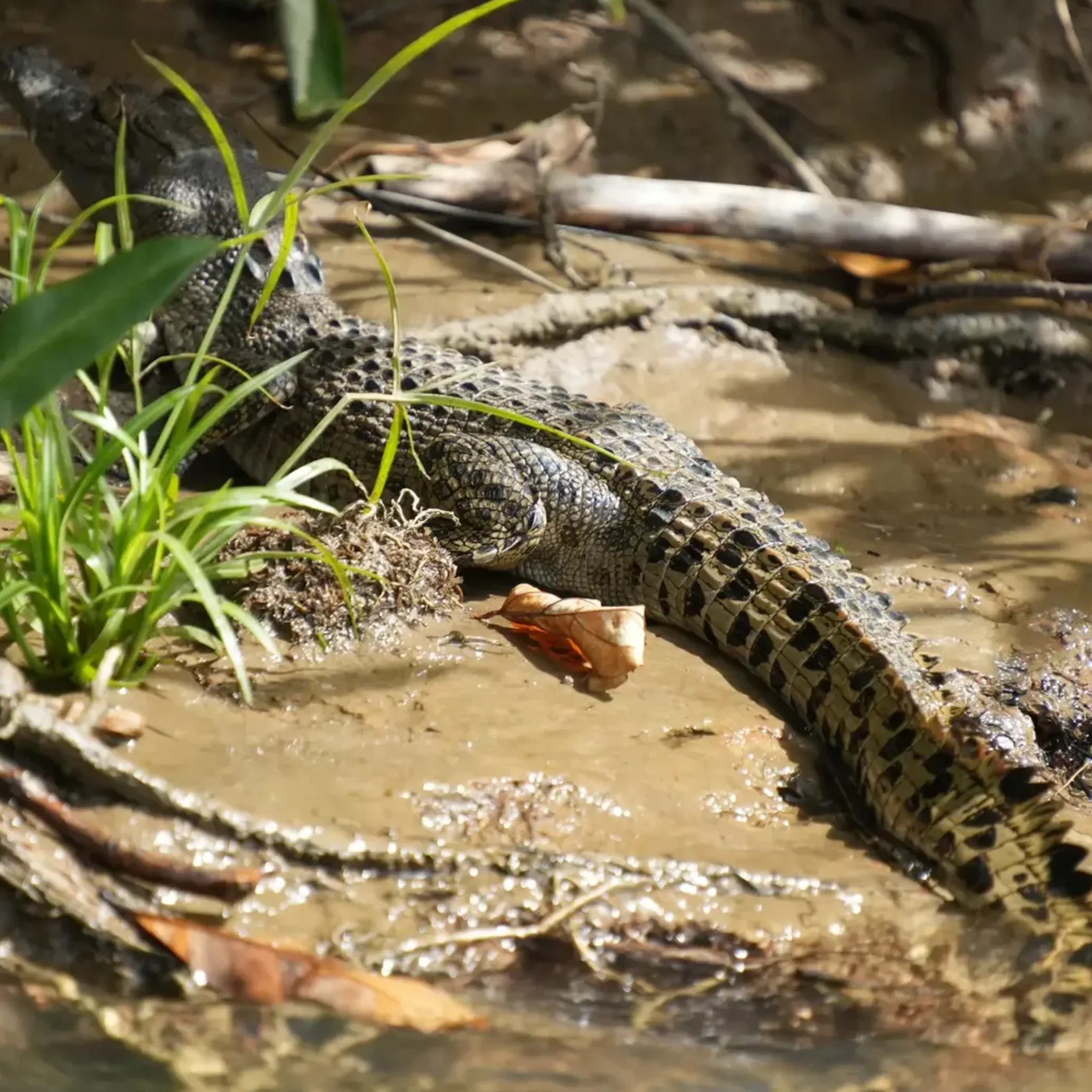
To get the full picture of Sweetheart one should make for the preserved specimen at the Museum and Art Gallery of the Northern Territory. It is a safer and more instructive proposition than venturing to some out of the way waterway the story is linked to.
Before making the trip, look up what the museum has on offer and when it opens. Do not rely on an old post on a travel forum from someone who could be three time zones away; opening hours and displays have a habit of changing.
The Display
Do not be in such a hurry to put a photograph on the camera that you miss the display. Take in the body length, the way the eyes are set and the breadth of the head. It puts into perspective the safety advice on keeping your distance and off the water’s edge.
If your interest is in the story of Sweetheart and you have but a day in Darwin, the museum should be your first port of call. Put in a wildlife excursion only if it is up to safety standards and does not leave you in a rush to get around. There is no honour in a timetable that is over packed.
Safety And Travel Planning
Crocodile safety in the Northern Territory is a present day concern even if Sweetheart belongs to history. Those making their way through the Top End ought to have their transport, fuel, water and phone coverage sorted before leaving Darwin, as well as checking the weather.
For the latest on park access and alerts, the Northern Territory Government parks and reserves information is the place to look. Rangers, land managers and tour operators will have directions to follow.
Practicalities
- Prior to departure, be sure of road conditions and any wet-season closures.
- Have food, sun protection, insect repellent, a charged phone and drinking water to hand.
- Stay well clear of boat ramps and the muddier parts of a riverbank.
- Where there is a warning, do not wade or swim.
- Crocodiles are not to be fed nor are fish to be left about.
- Should you want to come face to face with wildlife, engage a licensed operator and do as the crew say.
In the wet season an unsealed track can turn rough and some places are shut for safety or flooding. The dry is kinder on the roads but you still need to be prepared for the dust and heat with little shade to be had.
Reality Check
One might expect a tale of an enormous croc and a dangerous river with a tidy explanation. What one finds is less neat. Sweetheart was a wild creature with a proclivity for boats and his end came under trying conditions, not like something from the movies.
Some will spot a big crocodile and fancy they have found another Sweetheart. Most are not five metres in length and behaviour is a matter of size, sex, what is available to eat and prior experience among other things.
For Whom
The story has its appeal for the family, making for a good talk on why wild animals are to be respected. It is for those with an eye for NT history and Australian wildlife.
But it is not to be taken as an inducement for the uninitiated to put themselves in the vicinity of remote water. For a proper introduction, a guided tour or the museum is far preferable to unsupervised spotting in unfamiliar territory or poor light.
Frequently Asked Questions
Did Sweetheart hunt people?
Not according to any account we put forward. He made his name on the outboard motors and the boats he would attack. That is a distinction, but it is not to be thought of as harmless.
The Length of Sweetheart
Most accounts put the length of Sweetheart at some 5.1 metres, but one should consider that an estimate; historical figures are not as precise as a modern survey and can be subject to minor variations.
Of Where He Was From
Sweetheart made his home in the waterways of the Northern Territory. His tale is inextricably linked with the Finniss River and the Darwin area. There was no enclosure for him, he simply went about his business in the river and wetland habitat.
A Visit to See Sweetheart
The preserved specimen on show at the Museum and Art Gallery of the Northern Territory in Darwin is where one will find out more about him. It is advisable to look up what the museum has to say before making a trip, as access and opening times are not set in stone and exhibitions can come and go.
Top End Crocodiles: Still a Hazard?
Indeed they are. A saltwater croc is something of a safety issue in much of the Northern Territory’s waterways. One should not be wading or swimming in a river under any warnings, and it is best to heed the rangers and local authorities.
Lessons from Sweetheart
There is an element of the extraordinary in the size and ways of the Sweetheart crocodile that has not been forgotten. But there is also a more pragmatic point to be made: you do not have to act like a villain from the movies for wildlife to be dangerous.
The sensible thing for any traveller is to put some distance between himself and whatever has its eyes above the water. Make of the history and the museum display what you will, then show the Top End waterways the respect they are due. Nina Corcoran would call that being croc-wise, and it is an approach that does everyone, crocodile included, a world of good.